

Key Takeaways
- Dental bonding is faster and more affordable, but veneers are more durable and give better results.
- Veneers have more stain-resistant properties than dental bonding.
- Veneers have a more natural appearance than dental bonding.
- Dental bonding is more suitable for minor problems, while veneers are more appropriate for major cosmetic changes.
- The cost, durability, and maintenance requirements of veneers differ greatly from those of dental bonding.
- Cosmetic consultations are essential in choosing the right solution for your dental aesthetic concerns.
If you’ve ever looked in the mirror and noticed that your teeth have chips, gaps, or even tooth discoloration, then you’ve probably wondered what solution is best: dental bonding or veneers.
Dental bonding vs veneers is probably one of the most frequently asked questions in cosmetic dentistry. And honestly, it’s not hard to understand why.
Both solutions work. Both solutions fix your dental aesthetic concerns. But both solutions aren’t created equal.
Choosing the wrong solution could mean wasting more money in the future or not getting the results you want. So, what’s the difference? Let’s get into it in a simple and clear way so you can make an informed decision on what solution is best for your unique case.
What This Blog Covers
- What are dental bonding and veneers?
- Key differences in dental bonding vs veneers
- When is dental bonding recommended?
- When are dental veneers recommended?
- How durable is dental bonding vs veneers?
- Procedure Time and What to Expect
- Risks and maintenance
- How to choose the right option
- FAQs
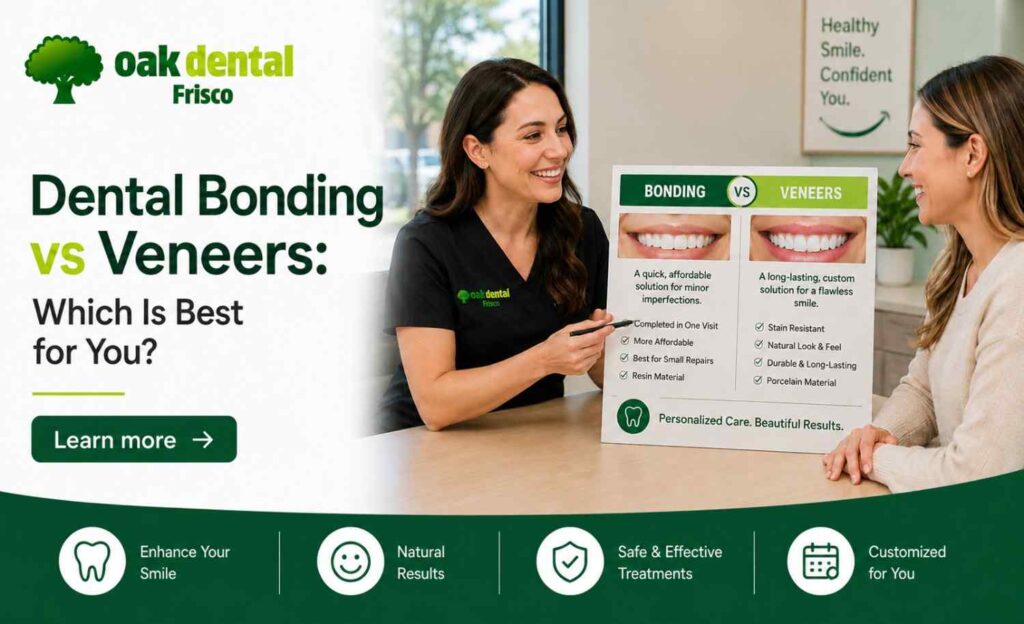
When choosing dental bonding vs veneers, what you want, how much you want to spend, and how long you want your results to last are all key considerations. Dental bonding is faster and more cost-effective, making it ideal for minor cosmetic corrections. Dental veneers, on the other hand, offer greater longevity and a more refined, perfected smile.
What Are Dental Bonding and Veneers
Dental Bonding
Dental bonding is a cosmetic dentistry procedure in which resin is applied to your teeth. The resin is then sculpted, hardened, and polished.
It’s commonly used for:
- Chipped teeth
- Small gaps between teeth
- Minor tooth discoloration
- Uneven edges
The dental bonding treatment is usually completed in just one visit. Your teeth do not have to be drastically altered.
Veneers
Veneers are wafer-thin pieces of material, usually porcelain, that cover your teeth. They are individually designed to fit your unique smile.
It’s commonly used for:
- Severe tooth discoloration
- Large gaps between teeth
- Worn or uneven teeth
- Full smile makeovers
Unlike dental bonding, veneers require more work and may require more than one visit.